USB Speed Test

So, you have your nice new shiny USB Stick. The print looks good, it’s well built, and you’re ready to go. Then the phone rings. That new USB stick you’ve got, could you put a few files on it and bring it round later?
.

..
This is often where true quality shines through.
.

We recently obtained branded USB sticks from some of our better rivals and performed speed tests on them. We also threw in a major highstreet USB Brand, just to see how we compared to the premium consumer sticks.
.
The worst of our rivals came in at 1 Megabyte writing, with just under 8 Megabytes reading speed. This was followed closely by our other rival, who clocked in at 1.18Megabytes writing. Their reading speed, however, came back at a shocking 4.81Megabytes per second. Now this may or may not mean much to you, so lets put it into context. Both of them would require approximately fifteen minutes to fill up a 1GB memory stick. The slower reading stick would then take almost four minutes just to read that data back off of the stick, with the better of the two coming in at just under two minutes.
.
Next up was the highstreet brand. This performed far better, 3.8Megabytes writing speed and 9.9Megabytes reading speed. Just over four minutes here to write a full gigabyte to the stick, and again just under 2 minutes to read the data back.
.
Now for our results. We picked a random stick out of our local stock, and found writing speeds of 4.1Megabytes per second, and a reading speed of 15.8Megabytes per second. Our one gigabyte stick would be writing at the same speed that some of our rivals are reading. Four minutes would leave you with a full memory stick. It would then take approximately one minute to read it back off of the stick.
.
So, why is this the case?
.
In other blog posts I’ve talked about the difference between good and bad suppliers. There are companies out there using dodgy controller chips, hacked memory and recycled chips. While we can’t verify for certain that the rivals we tested don’t take part in these practices, this probably wasn’t the case in this situation. It was a simple case of “acceptable” quality against high quality.
.
Flash memory is available, from the major suppliers (such as Sony) in both “A” and “B” grade. The B grade memory is perfectly good memory that failed to meet certain standards with regards to speed, reliability and performance. However, it was deemed “acceptable” for certain uses, therefore didn’t end up in the bin with really bad chips. This B grade memory is then put into promotional USB drives in order to cut costs. After all, they are being given away free, right? I’m sure your customers won’t blame you if they end up slow, unresponsive and ultimately unreliable in comparison? Will they? I mean, they were free, after all?
.
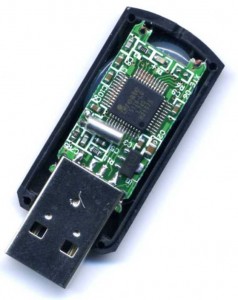
At USB Company, we’d rather not take that risk. We believe in only using the highest quality memory, paired with the highest quality controller chips, put together in the highest quality factories, complete with the highest quality finish. The result of that is plain to see.= Faster chips, far lower failure rates, and lots of very satisfied customers.
.

So ask yourself. Would you be happy if it took you almost 20 minutes to write some data onto your USB Stick then copy it onto another computer?
.
If your friend was doing the same thing in five minutes, I bet you wouldn’t be.

ECO USBs, Saving our Planet one Tree at a time.

Did you know that major retailers (such as Ikea or Argos) regularly use over one hundred thousand tons of paper every year on marketing tools, such as catalogues and promotional flyers? Or that around 4.5 billion trees are cut down every single year, just for the production of paper? Or that the paper industry is the 3rd largest emitter of greenhouse gasses in the world? .

At the same time, around 40% of our waste burdon tends to be paper. 40% of what we throw away. What does that suggest happens to all these flyers, catalogues and other materials? . Why not try offering customers a catalogue on a USB stick? Or your students their course materials on usb rather than in thick folders that will end up at the top/bottom (delete as appropriate) of their wardrobe? Why not file internal reports on USBs rather than in giant stacks of paper that’ll end up in the shredder tomorrow, and the bin the day after? .

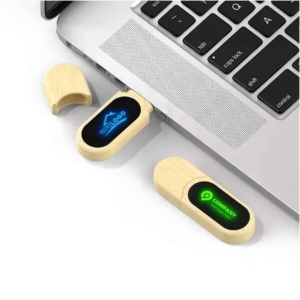
And why not go one step further, and look into buying some of our eco-usbs for the job? Made from bamboo, probably THE most renewable sources of wood on the planet, they are both renewable and environmentally friendly in production, and save the planet one tree at a time by keeping all your documents in an electronic form. . What do you have to lose? Other than Earth, of course. .

USB PriceUSB Quality

Why we’re not always the cheapest

Clients have come to us in the past with quotes from other companies, asking us if we really are the best choice, why it is we’re not always the cheapest?

.

.

There are factories out there that cut corners in order to bring down the unit cost. The following is a list of how manufacturers can dramatically reduce the cost of USB flash drives:

.

  • Hack the memory chip so it appears larger than it is. (256mb hacked to appear like 512MB)
  • Buy recycled memory and sell as “new”
  • Use faulty PCBs or badly designed Controller chips.
  • Low Quality Plastic Casing
  • Cheap Finish
  • Use paint without hardeners so the Logo print easily rubs off

.

.

These are commonly know as “White chips” and tend to be unreliable, more prone to data loss, and often suffer from quite bad degradation over time.

.

.

A well designed USB chip should work perfectly for approximately 10,000 write/erase cycles, which is the equivalent of filling and emptying the stick once a day for 27 years. “White chips” however, may start to suffer right from the first cycle. Other problems that are far more likely with these sorts of practices include operating systems failing to recognise the memory at all, error messages and very slow data transfer speeds.

.

.

There are also factories out there that use perfectly good chips, but just of a lower quality. These goods should last roughly the same amount of time as our chips (10,000 cycles), but tend to have slower read/write speeds and be slightly more prone to errors. There’s nothing wrong with these sticks, in the same way there’s nothing wrong with Tesco Value coffee. However, you wouldn’t serve it to an important customer, would you?

.

.

Now at the USB Company, we realised that you can only be the best at one thing. We decided that rather than join the multitude of companies who try to compete at price, trying their best to cut another corner to get those extra few pennies off of the manufacturing cost of each stick, we’d rather compete on quality.

.

.

We decided that while Mercedes Benz aren’t the cheapest car manufacturer, they are considered among the best, and while Ryan Air can often out price their competitors by quite a margin, we’d all rather not fly with them if we can afford anything else.

.

.

In order to do this, we have teamed up with factories in the Far East, where quality, rather than cost, is the number one priority. We are very careful as to who we buy parts from, be it controller chips or hardeners for the paint, and have set up relationships with our suppliers over several years.

.

We also have an extensive quality assurance system, testing items both at the point of manufacture and here in the UK.

.

.

So, some companies may be a little cheaper than us. However, our products are likely to be a bit better than theirs, with a better finish, better materials used, and better technology inside.

.

.

However, we would recommend avoiding them like the plague! Remember, if they are charging you less, they are also buying for less, and buying for less usually means cutting corners, not margins.

.

.

“The bitterness of poor quality is remembered long after the sweetness of low price has faded from memory.” - Aldo Gucci,

ErasableLocked USB Data

.

Our Promotional USB sticks can be preloaded with your choice of content i.e. Software program, catalogues, power point presentation, flash presentation and pop-up websites.

.

..

..

.

.

1. Standard Preload- We copy your content to your promotional USB drives and users can access it at their will and can also delete the files if they don’t want them.

Pros: Non Intrusive, Higher retention value thus more exposure of your logo.

Cons: Data can easily be deleted by user.

.

.

2. Non-Erasable content

To ensure the effectiveness of your campaign we can protect your preloaded content from being deleted. The computer will recognise the locked data as a CD ROM which the user can not delete or amend in any way. The erasable part of the usb stick will appear as normal and can be used to transfer and store files as a normal usb memory stick.

Pros: Continuous exposure and data retention.

Cons: Users can not delete data to free up space on the Branded USB

.

.

3. Non-Erasable Autorun

As soon as the USB stick is inserted it will launch a presentation. This could be a website pop up or flash presentation or any other file that can be autorun in Windows. This is our most direct option and will suit a new product launch or other events where the user have less knowledge about your product or service.

Pros: Maximum exposure

Cons: Less retention value, Intrusive.

.

.

Recommendation:

Generally we would recommend to preload your USB Stick with the standard preload or the Non Erasable Option. Assuming your target audience already know your brand and have an interest in your product or service.

.

.

Important Notice:

Non Erasable and Auto run Preload will only work seamlessly with Windows based computers(Windows 98 and Newer)

Standard Prelaod will work across all platforms and is recommended if your target audience use other platforms than Windows.

Memory in Branded USB sticks

There are two types of NAND Flash memory architectures: MLC(Multi Level Cell) and SLC(Single Level Cell).

In a nutshell, MLC are used in those devices requiring high performance at an attractive cost such as USB sticks and voice recorders.

SLC are used in the higher performing technology that is used to enable streaming video and Internet capability in handheld electronics such as 3G cell phones, PDAs, digital still / video cameras and MP3 players etc.

All our branded USB drives use MLC memory from Hynix, Samsung or Micron unless otherwise specified. MLC NAND Flash is rated to last approximately 10,000 cycles, which is considered more than sufficient for the average consumer application.

For example, a USB drive application that used the 10,000 write/erase cycles would enable the user to completely write and erase the entire contents once per day for 27 years, well beyond the life of the hardware.

We would also like to warn people about companies offering VERY cheap flash drives. Although many of the products appear same, the inside might be VERY different.

We spend a significant amount of resources in quality control and service. Therefore, our product prices are never the lowest in the industry. We want to give you some facts so that you can better protect your rights and investments.

In general there are four methods to dramatically lower the production cost of the USB flash disks. Unfortunately whichever method or combinations are used, product quality is sacrificed. These methods are usually some of the following:

  • Use faulty or recycled flash memory chips, which might cause read and write errors
  • Change flash memory chip volume information so that the lower capacity chips appear to be higher capacity (e.g. from 256MB to 512MB)
  • Use faulty designed PCBs, which might cause severe electromagnetic interference
  • Use faulty designed controller chips, which might cause compatibility problems when using flash disks under different operating systems

Whenever these methods are applied, you can expect problems such as users being unable to save onto the flash disk, or read and copy from the flash disk. It often occurs that operating systems can’t recognise the flash disk, I/O error messages occur, and storage capacity diminishes as the time passes.

By choosing USB Company, you can rest assured none of these will occur.