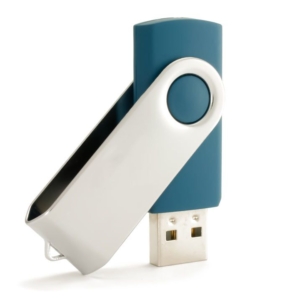
USB Company are proud to announce that we are the first major promotional USB supplier to offer custom branded USB sticks with hardware based encryption!


We’ve offered software based encryption for a few weeks now, and it has proved fairly popular.  When data’s merely confidential and best kept private, rather than potentially damaging, software based protection is perfect. It takes quite a lot to force your way through the layers of security, and with little to gain it’s unlikely anyone will bother to do so.


However, we do understand that some of you carry data on USB Sticks that is absolutely critical. Sometimes the remotest possibility of data being retrieved from a lost or stolen device is so worrying that even the best software based methods aren’t good enough. Therefore, we’re proud to announce that we’ve recently entered a partnership with a major provider of hardware-based encryption for flash drives.  As a result of this, we can now offer sticks with a dedicated processor installed that looks after the encrypting of data. This protects both against hacking attempts and human error, as any data written to the drive is automatically encrypted before it’s stored to the flash memory.


Hardware based encryption is considerably more expensive than standard software based encryption, due to the fact that each stick has a processor dedicated to encrypting data. However, we are offering very competitive prices, and are currently able to offer branded sticks for their generic, off the shelf recommended retail prices.

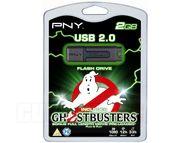
USB Sticks pre-loaded with music is old news; Sony have now pre-loaded USB Sticks with the Ghostbusters movie! 
.
For the extortionate cost of £29.99, you can now carry your own little piece of nostalgic movie history in your back pocket!
.
So yeah, it’s kind of a waste on a film that’s only taking up a small fraction of the space. But what about entire series in a single solid state device? One that won’t scratch, and takes up less space on your shelf?
.
It might not happen tomorrow, but USB Sticks are the future of media. As higher memory flash sticks become more and more affordable, it’s only a matter of time until the DVD finds itself a real rival in the form of the USB Flash Drive.
.
Just remember, don’t cross the streams!
.

USB Speed Test

So, you have your nice new shiny USB Stick. The print looks good, it’s well built, and you’re ready to go. Then the phone rings. That new USB stick you’ve got, could you put a few files on it and bring it round later?
.

..
This is often where true quality shines through.
.

We recently obtained branded USB sticks from some of our better rivals and performed speed tests on them. We also threw in a major highstreet USB Brand, just to see how we compared to the premium consumer sticks.
.
The worst of our rivals came in at 1 Megabyte writing, with just under 8 Megabytes reading speed. This was followed closely by our other rival, who clocked in at 1.18Megabytes writing. Their reading speed, however, came back at a shocking 4.81Megabytes per second. Now this may or may not mean much to you, so lets put it into context. Both of them would require approximately fifteen minutes to fill up a 1GB memory stick. The slower reading stick would then take almost four minutes just to read that data back off of the stick, with the better of the two coming in at just under two minutes.
.
Next up was the highstreet brand. This performed far better, 3.8Megabytes writing speed and 9.9Megabytes reading speed. Just over four minutes here to write a full gigabyte to the stick, and again just under 2 minutes to read the data back.
.
Now for our results. We picked a random stick out of our local stock, and found writing speeds of 4.1Megabytes per second, and a reading speed of 15.8Megabytes per second. Our one gigabyte stick would be writing at the same speed that some of our rivals are reading. Four minutes would leave you with a full memory stick. It would then take approximately one minute to read it back off of the stick.
.
So, why is this the case?
.
In other blog posts I’ve talked about the difference between good and bad suppliers. There are companies out there using dodgy controller chips, hacked memory and recycled chips. While we can’t verify for certain that the rivals we tested don’t take part in these practices, this probably wasn’t the case in this situation. It was a simple case of “acceptable” quality against high quality.
.
Flash memory is available, from the major suppliers (such as Sony) in both “A” and “B” grade. The B grade memory is perfectly good memory that failed to meet certain standards with regards to speed, reliability and performance. However, it was deemed “acceptable” for certain uses, therefore didn’t end up in the bin with really bad chips. This B grade memory is then put into promotional USB drives in order to cut costs. After all, they are being given away free, right? I’m sure your customers won’t blame you if they end up slow, unresponsive and ultimately unreliable in comparison? Will they? I mean, they were free, after all?
.
At USB Company, we’d rather not take that risk. We believe in only using the highest quality memory, paired with the highest quality controller chips, put together in the highest quality factories, complete with the highest quality finish. The result of that is plain to see.= Faster chips, far lower failure rates, and lots of very satisfied customers.
.

So ask yourself. Would you be happy if it took you almost 20 minutes to write some data onto your USB Stick then copy it onto another computer?
.
If your friend was doing the same thing in five minutes, I bet you wouldn’t be.

Memory in Branded USB sticks

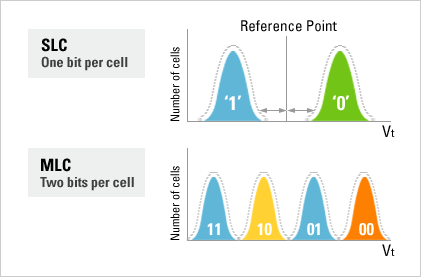
There are two types of NAND Flash memory architectures: MLC(Multi Level Cell) and SLC(Single Level Cell).

In a nutshell, MLC are used in those devices requiring high performance at an attractive cost such as USB sticks and voice recorders.

SLC are used in the higher performing technology that is used to enable streaming video and Internet capability in handheld electronics such as 3G cell phones, PDAs, digital still / video cameras and MP3 players etc.

All our branded USB drives use MLC memory from Hynix, Samsung or Micron unless otherwise specified. MLC NAND Flash is rated to last approximately 10,000 cycles, which is considered more than sufficient for the average consumer application.

For example, a USB drive application that used the 10,000 write/erase cycles would enable the user to completely write and erase the entire contents once per day for 27 years, well beyond the life of the hardware.

We would also like to warn people about companies offering VERY cheap flash drives. Although many of the products appear same, the inside might be VERY different.

We spend a significant amount of resources in quality control and service. Therefore, our product prices are never the lowest in the industry. We want to give you some facts so that you can better protect your rights and investments.

In general there are four methods to dramatically lower the production cost of the USB flash disks. Unfortunately whichever method or combinations are used, product quality is sacrificed. These methods are usually some of the following:

  • Use faulty or recycled flash memory chips, which might cause read and write errors
  • Change flash memory chip volume information so that the lower capacity chips appear to be higher capacity (e.g. from 256MB to 512MB)
  • Use faulty designed PCBs, which might cause severe electromagnetic interference
  • Use faulty designed controller chips, which might cause compatibility problems when using flash disks under different operating systems

Whenever these methods are applied, you can expect problems such as users being unable to save onto the flash disk, or read and copy from the flash disk. It often occurs that operating systems can’t recognise the flash disk, I/O error messages occur, and storage capacity diminishes as the time passes.

By choosing USB Company, you can rest assured none of these will occur.